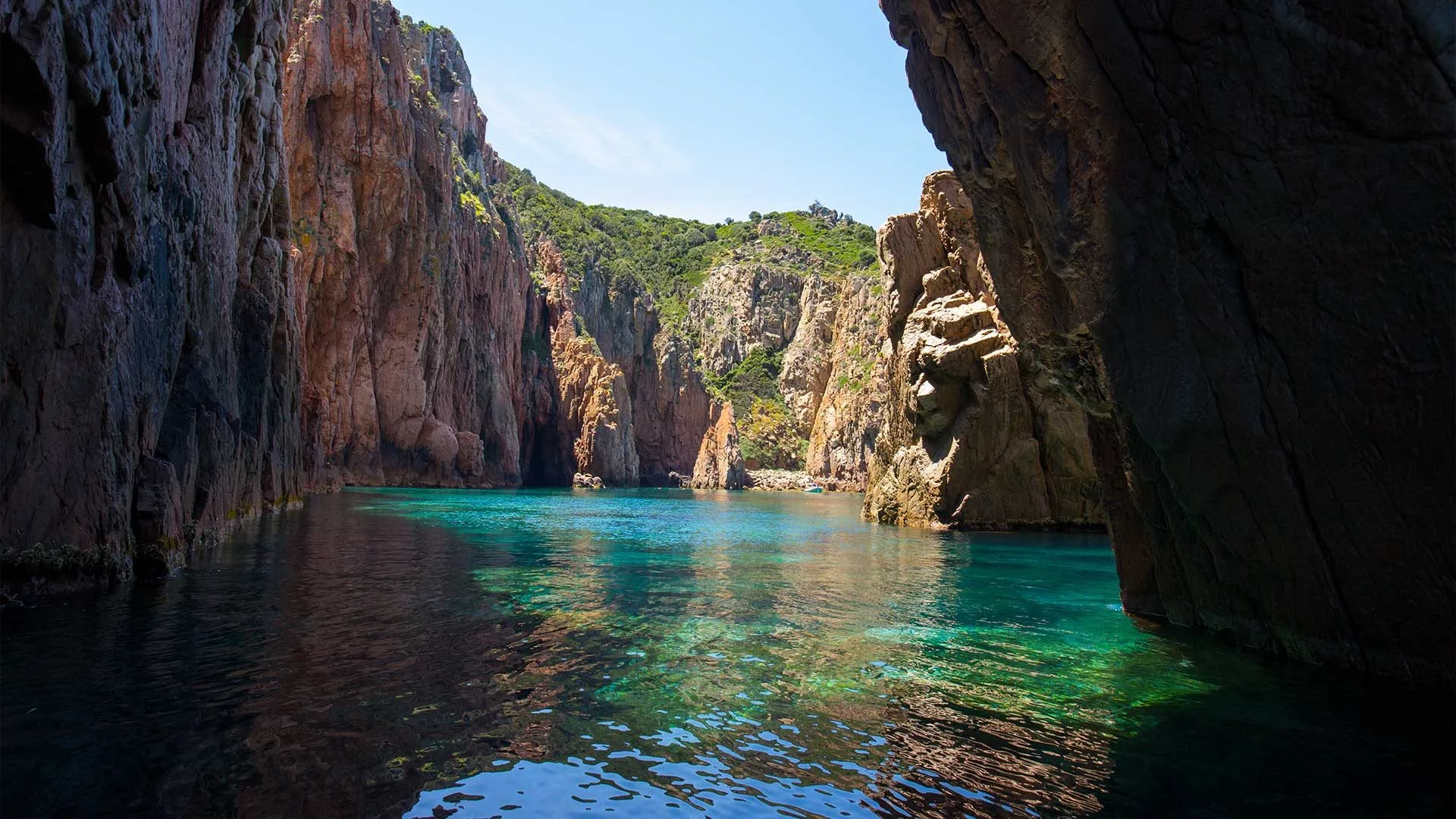
The Scandola Nature Reserve is one of the most spectacular natural sites in the whole Mediterranean. A UNESCO World Heritage site since 1983 — a marine and a land reserve at once — it cannot be reached by road at all. The only way to see it is by boat, from Porto.
That constraint is far from a drawback: it is part of the magic. You come to Scandola the way coastlines were discovered long ago, from the sea, facing landscapes that have not changed in millions of years.
Why is Scandola so unique?
Scandola owes its extraordinary character to a combination of factors that rarely come together:
- The geology: the cliffs of Scandola are rhyolite, a red and ochre volcanic rock whose tones shift with the hour and the light. Carved by 250 million years of erosion, they form caves, arches and rock formations of striking beauty.
- Marine life: the reserve protects exceptionally rich waters. Dusky groupers, conger eels, moray eels, spiny lobsters and Neptune grass share water of remarkable clarity. Fishing has been completely banned here since 1975.
- Ospreys: Scandola is home to one of the last breeding colonies of osprey in France. These magnificent raptors, which dive to catch fish, nest on the inaccessible cliffs. Watching them from a boat is unforgettable.
- The vegetation: on land, the Mediterranean maquis holds several endemic Corsican species, and seabirds — European shags, Audouin's gulls — find shelter here.
How to visit Scandola from Porto
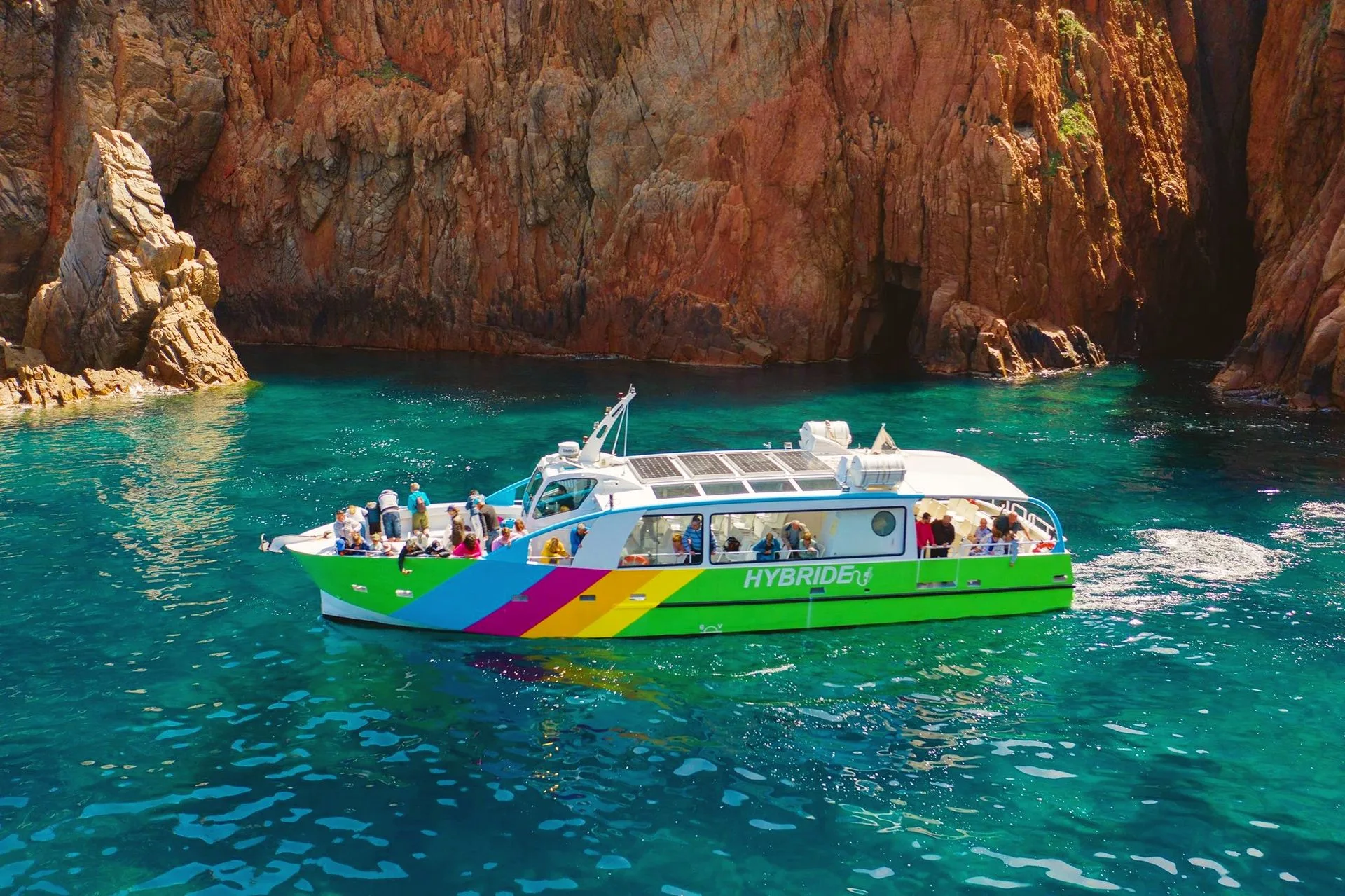
Several boat operators leave the harbour at Porto every morning, from May to October. What is on offer varies by duration and by the type of boat:
The RIB: for the thrill
A rigid inflatable boat is the best choice for getting as close as possible to the sea caves and the narrow passages larger boats cannot enter. Fast and nimble, it makes for a more intense trip, closer to nature. These excursions usually last 3 to 4 hours.
The conventional motorboat: for comfort
For families with young children, or anyone who prefers more room and more stability, conventional boats offer just as complete a visit, often with commentary from a guide. These trips last 4 to 5 hours, with a swimming stop.
The full day: Scandola and the Calanques
The most complete option combines Scandola with a visit to the Calanques de Piana over a full day (6 to 8 hours). It is the best way to take in the geological variety of Corsica's west coast in a single outing.
When to go
The reserve can be visited from May to mid-October. A few pointers:
- May-June: calm sea, beautiful light, few people on the boats. Ideal for seeing the reserve in peace. Wildlife is very active.
- July-August: peak season. Boats leave daily, sometimes several times a day. Booking several days ahead is essential.
- September: often reckoned the finest month. The sea is still warm, the crowds have thinned, and the autumn light turns the red cliffs golden. Conditions are generally excellent.
What to bring
- Sun cream and sun protection (reapplying at sea is a must)
- Sunglasses with high UV protection
- A light layer for the spray on a RIB
- A bottle of water and a snack
- A camera or a waterproof phone
- Mask and fins if you want to make the most of the swimming stops
⚓ Important: swimming into the reserve and mooring inside it are strictly forbidden. Boats stay on the outer perimeter, which takes nothing away from the spectacle. Fishing and collecting are likewise completely prohibited.