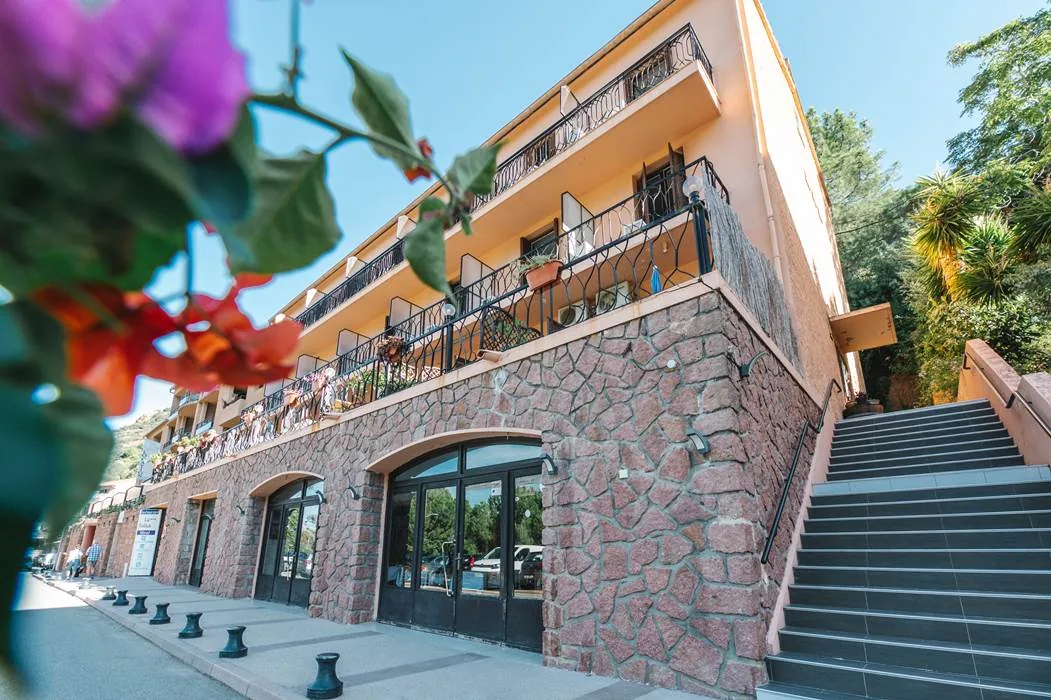
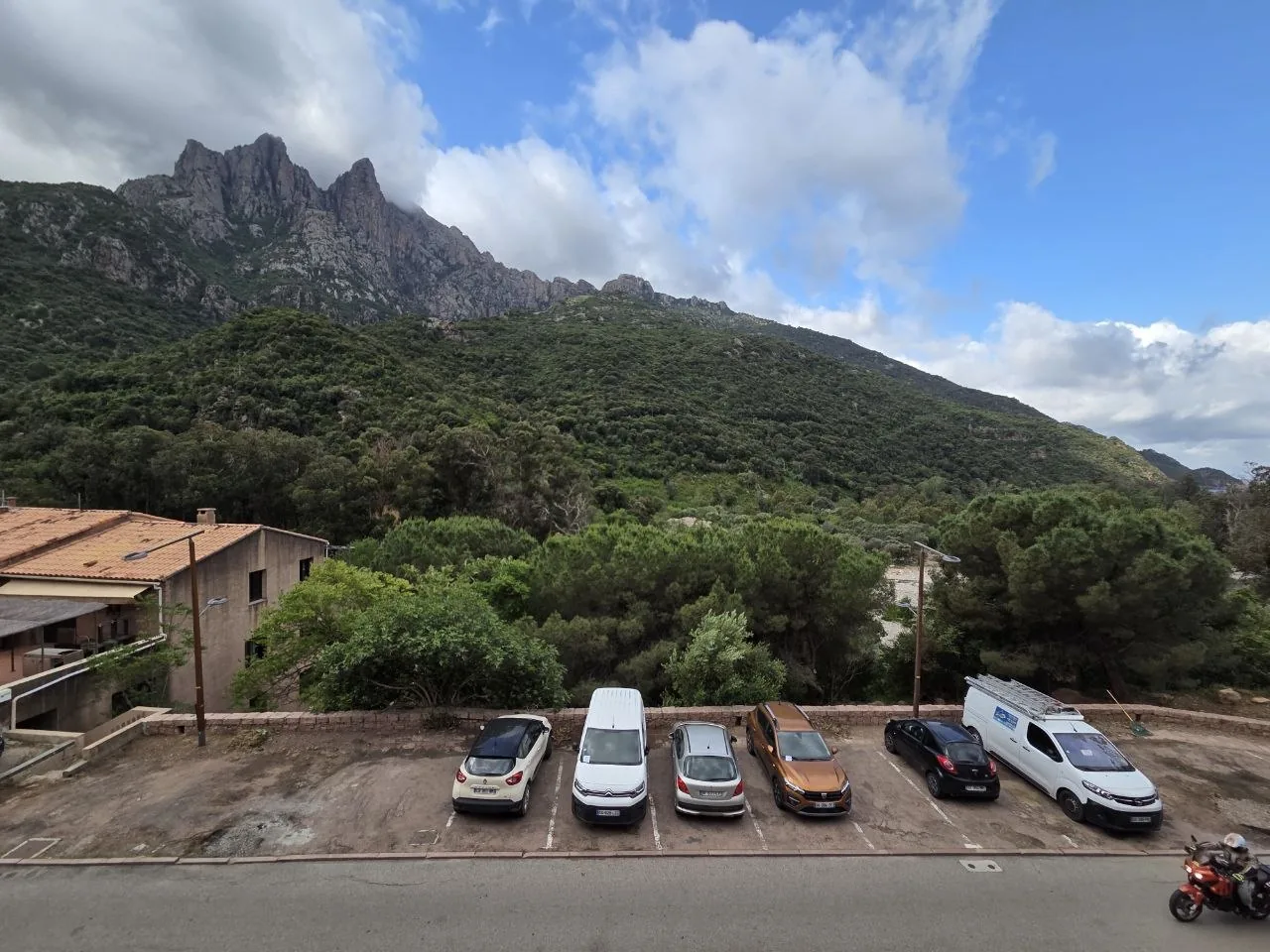
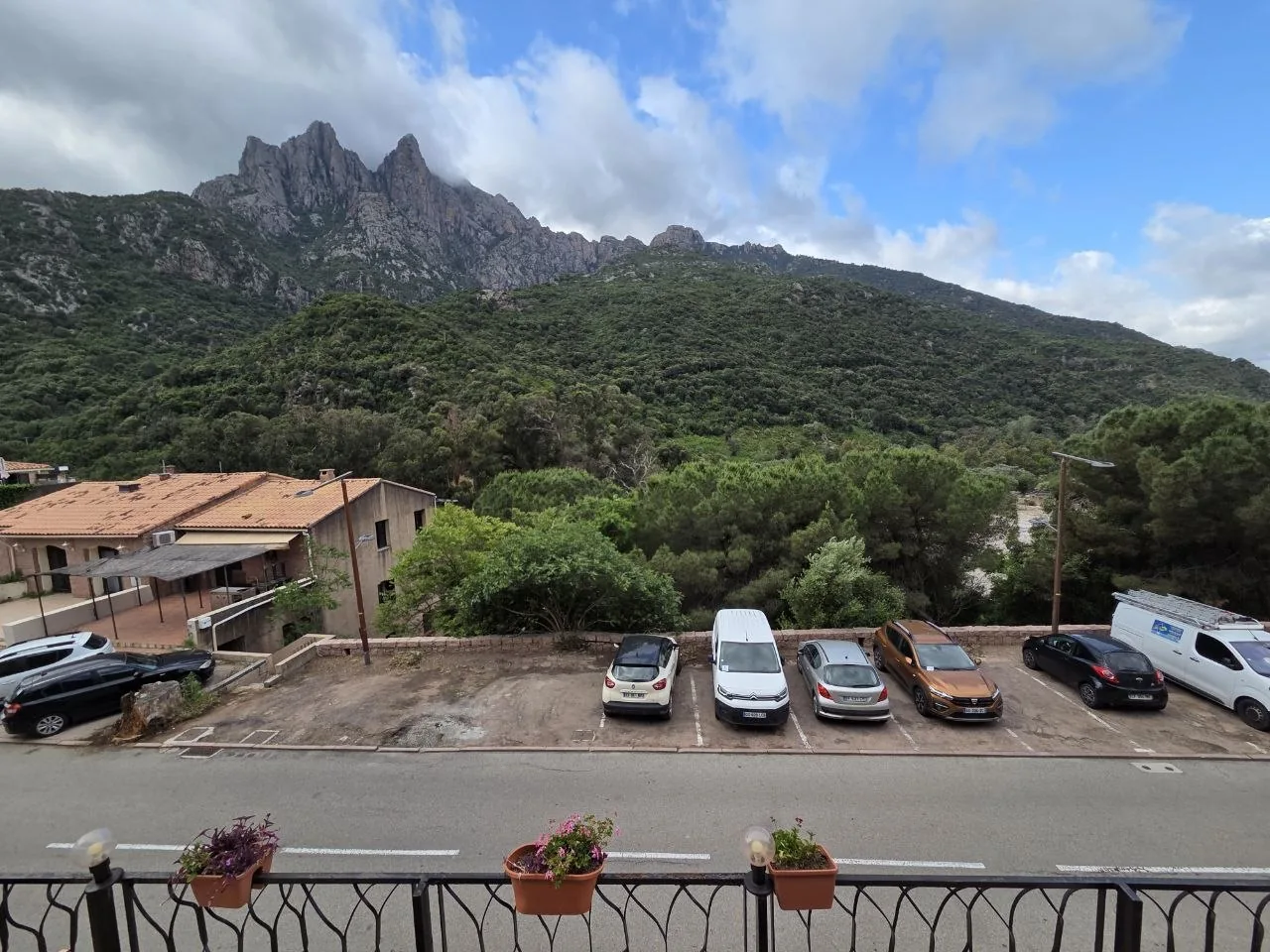
In Porto, in Corsica, parking is always a sore point in season. In front of Hôtel Le Vaïta, on the public car park that runs along the front of the building (so the spaces are not private), two old eucalyptus stumps were blocking an area that, once cleared, could take two extra parking spaces.
Rather than call in a firm with a mechanical stump grinder, we chose a slower method: burning the stumps little by little through the winter, then filling the hole by hand with my father-in-law. In total: about 4 hours of work and 3 bags of cement. Here is the story of a job done as a family.
Why two stumps in front of the hotel?
The two eucalyptus trees had been planted several decades ago, as many were in Corsica, for the shade and for their scent. But the roots had spread near the surface, lifting the tarmac and making the area unusable for parking. Once the trees were felled, the stumps remained — dense, deep and far too bulky simply to cover over.
Rather than hire a machine, we tried a traditional approach that has already proved itself on large stumps: slow burning.
Step 1: burning the stumps all winter, in stages
Winter is the only season when you can light a fire outdoors in Corsica without risk or restriction. It is also the quiet season in Porto — no guests in the car park, no smoke bothering the neighbours on their terraces. Perfect for working through it steadily.
The method: light a fire directly on the stump, feed it for several hours, let it cool, come back a few days later and start again. With each session the stump burns down a little more, the charred wood collapses, and you end up hollowing the wood out from the centre. It is slow, but it works.
It took several sessions spread across the winter to see off both stumps. Each time I would set the fire going again, watch the burn, and let the embers do their work. No chemicals, no brutal grinding of the ground: just fire, time and a little Corsican patience.
Step 2: filling the hole with my father-in-law
Once the stumps had burnt away entirely, two gaping holes were left where the trunks had been. To close them properly I teamed up with my father-in-law. We worked in three successive layers:
- A first layer of sand tamped into the bottom of the hole, to create a stable bed and absorb any movement in the ground.
- A cement and sand mix poured on top (3 bags of cement in all for the two holes), to seal it deep down and prevent any subsidence under the weight of a vehicle.
- A final layer of sand at the surface, to join cleanly to the existing ground level and allow the car park surface to be made good.
Allow about 4 hours of work between two people to fill both holes, sand and cement included. Each layer was tamped carefully: the aim is a perfectly level base, able to take parked cars without deforming.
The result: two more parking spaces in front of the hotel
With the job finished, two extra spaces are open on the public car park running along the front of Hôtel Le Vaïta. These spaces are not private — they remain freely available, like the rest of the village parking. But in practice it means two more cars can park directly in front of the hotel, which makes all the difference in high season when parking in Porto becomes a challenge.
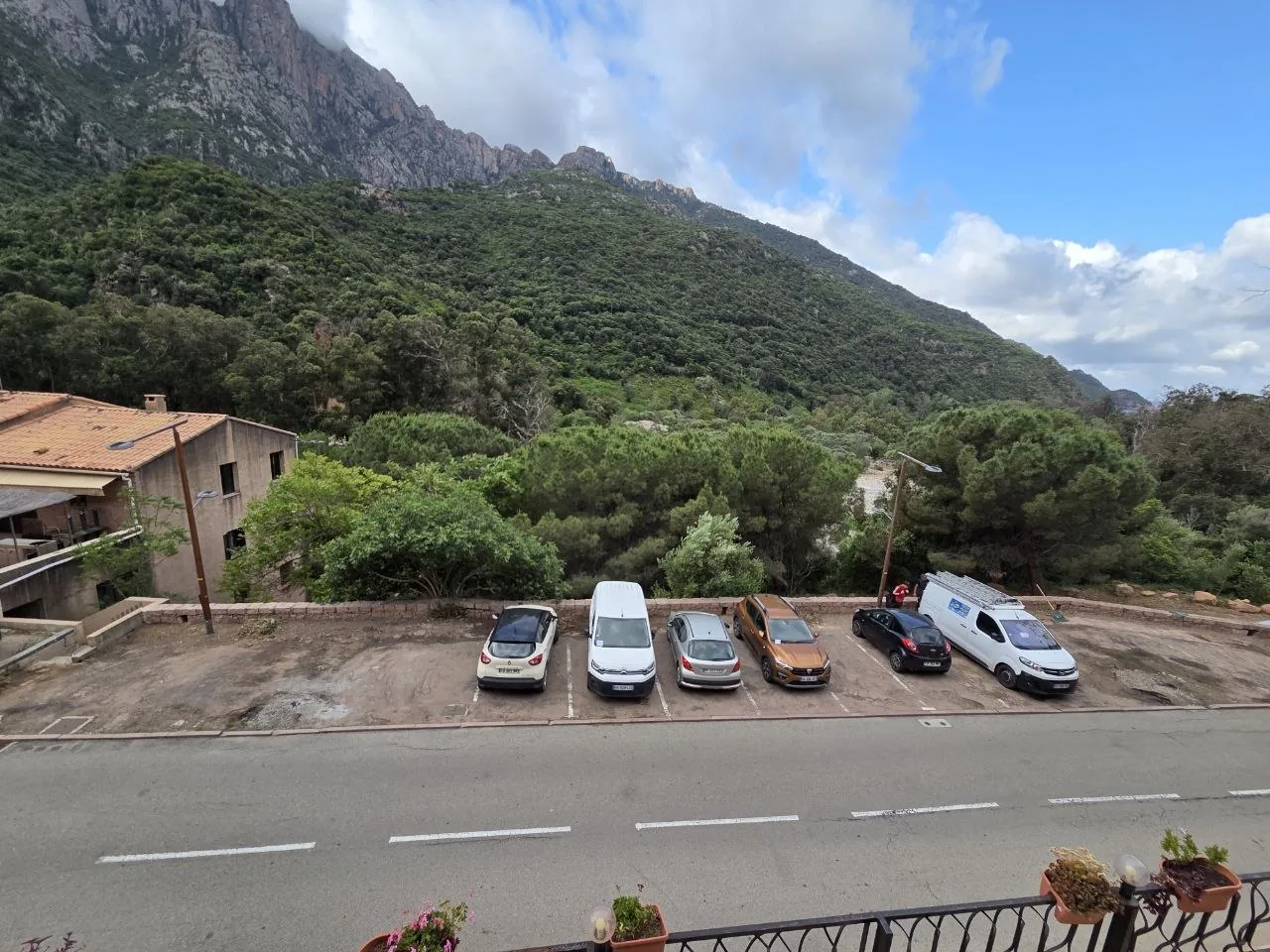
🅿️ Parking at Hôtel Le Vaïta. Parking in Porto is entirely free and public. These two new spaces add to what was already available in front of the hotel and on the car park 50 m away. Cyclists and motorcyclists also have our secure private garage.
A job in the image of the hotel's renovation
Like much of the work carried out during the renovation of Le Vaïta, this was done as a family, by hand, at the pace of the seasons. We could have subcontracted it — we chose to do it ourselves, not to save money, but because that is also how a place takes on its character. Every stump burnt, every bucket of sand poured, is a little of us going into the hotel.
Head to the blog to follow the next stages of the renovation — or come and see the result for yourself by booking a room in Porto.