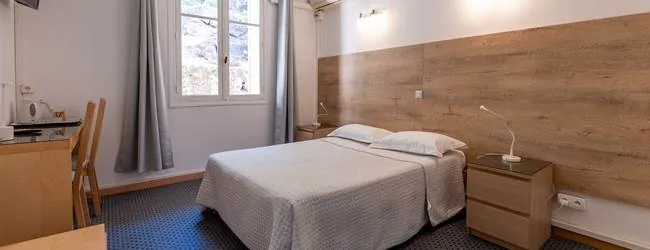
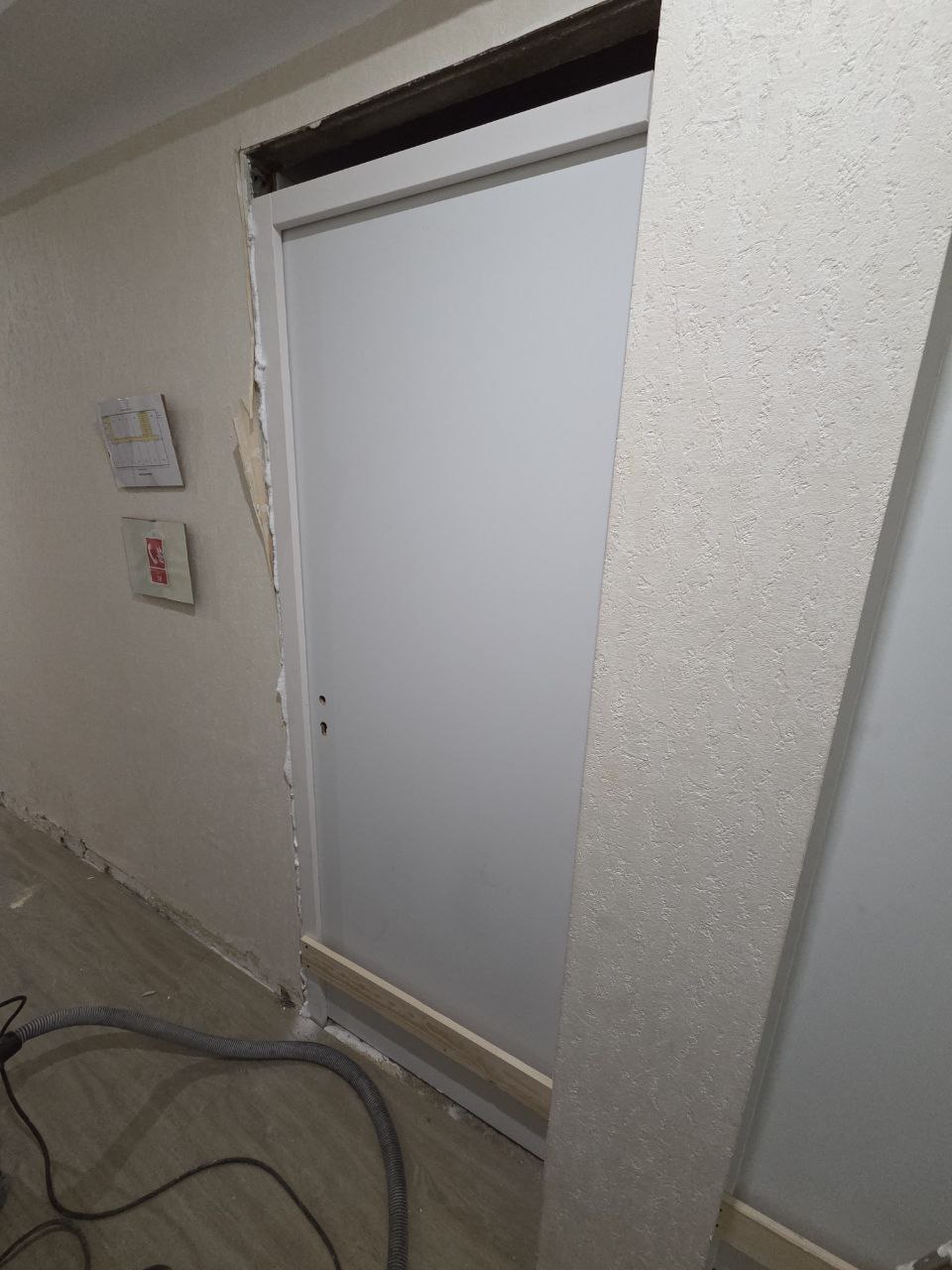
Doors and walls are rarely the first thing you notice in a hotel. And yet a good part of the comfort — and of the safety — is decided there. Here is what we did on the third floor, in order.
Step 1: taking out the double doors — as a family
The third-floor rooms had double doors — one door on the corridor side, another a few centimetres further in. The idea at the time was probably to improve insulation, but in practice it no longer worked very well: the seals had aged, it ate into the corridor space, and the whole thing had had its day.
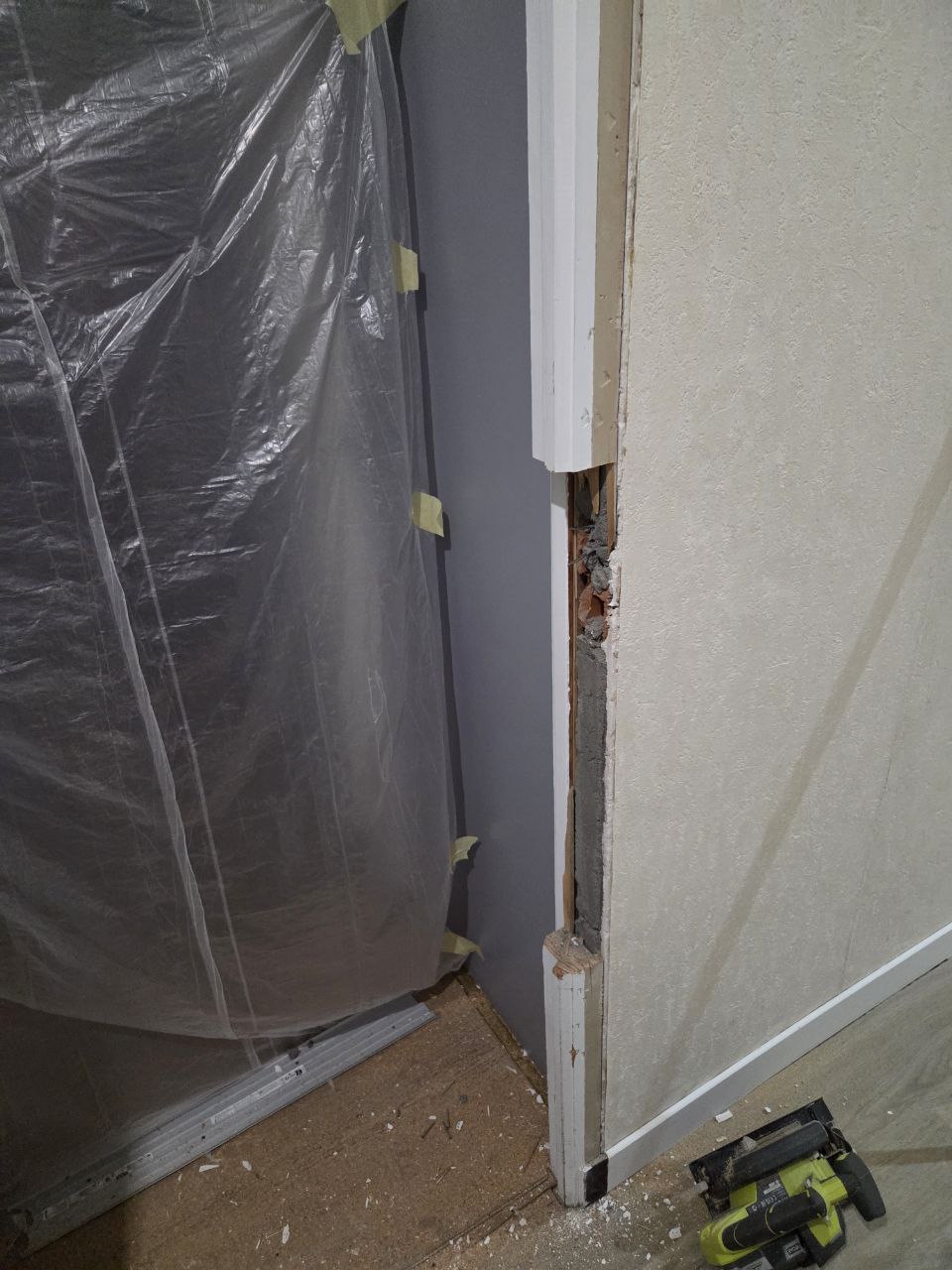
The whole family lent a hand with the removal. It is physical, a little dusty, but not very technical — a good chance to get stuck in together and make quick progress. Once the old doors and frames were out, we had access to the walls for the next stage.
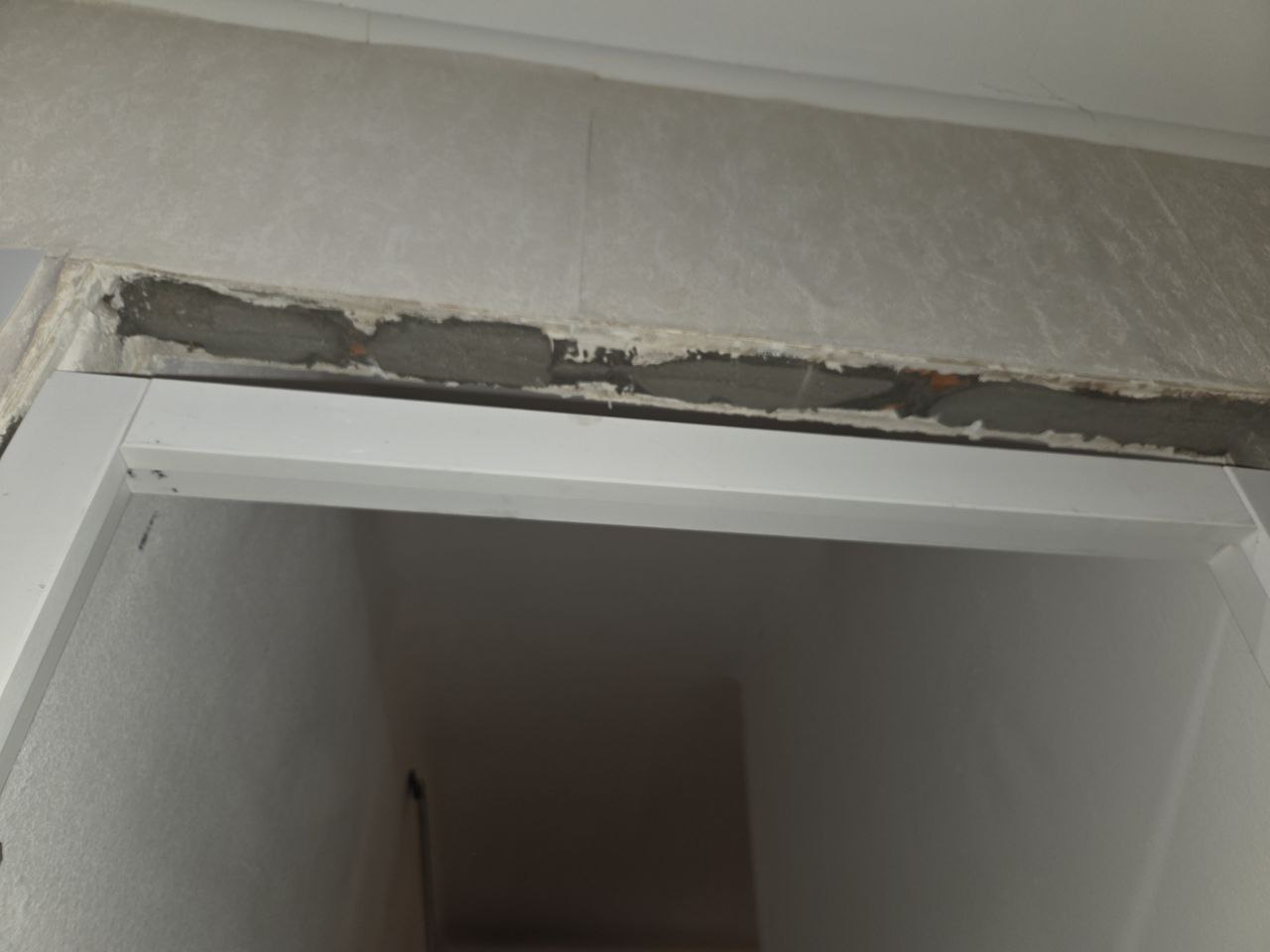
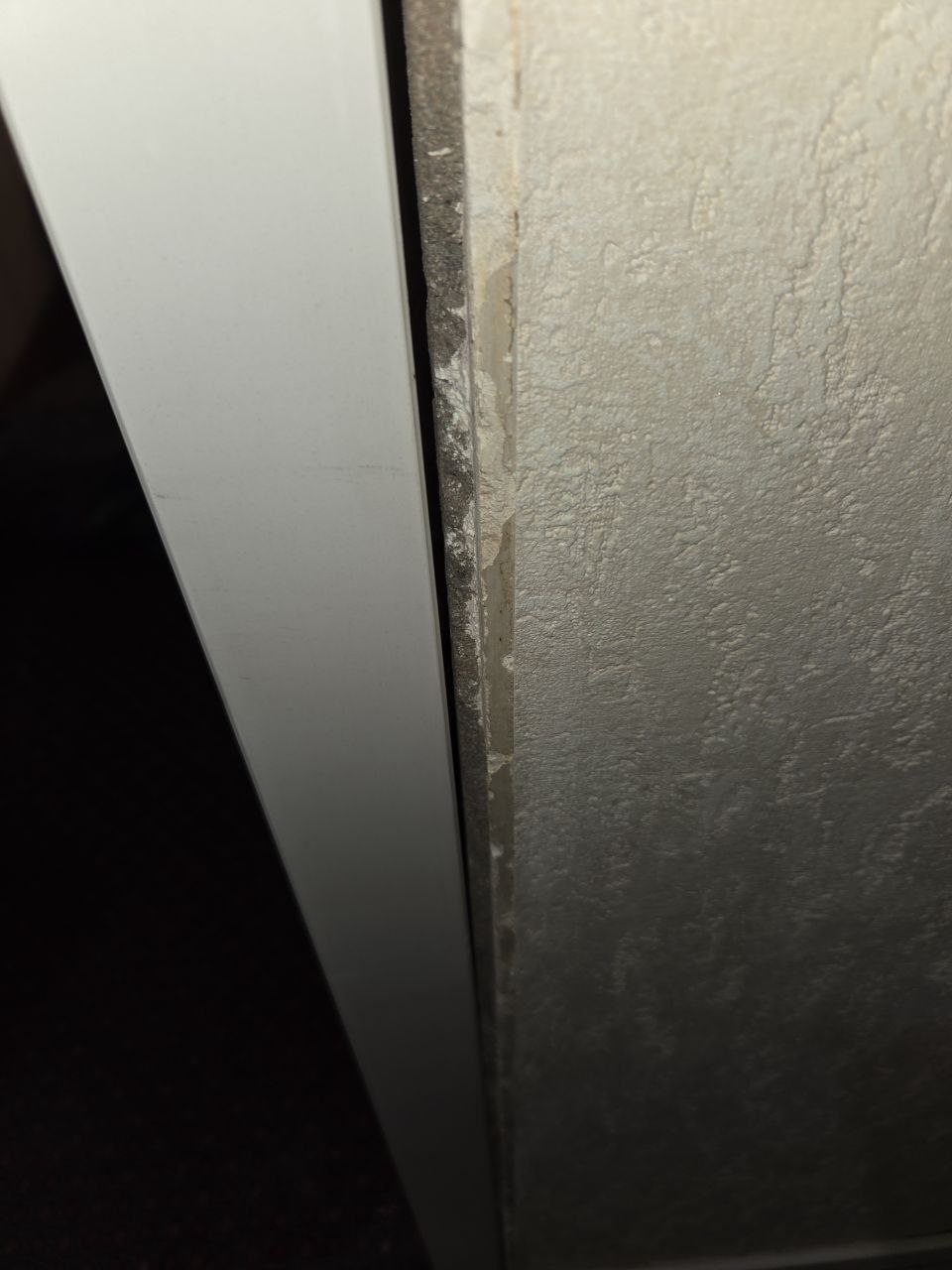
Step 2: insulating the walls
With the openings stripped back, we took the opportunity to treat the walls. The aim: to limit what travels from one room to another — voices, the television, footsteps in the corridor. Nobody wants to hear their neighbour at seven in the morning.
We worked on the partitions to reduce the transmission of airborne sound and impact noise. It is the kind of work that cannot be seen once finished, but that genuinely changes the experience of being a guest.
🔇 Acoustic comfort matters. In a hotel, sleeping soundly also comes down to the walls. A guest who has slept well is a happy guest — and one who comes back.
Step 3: fitting the fire doors — Olivier's work
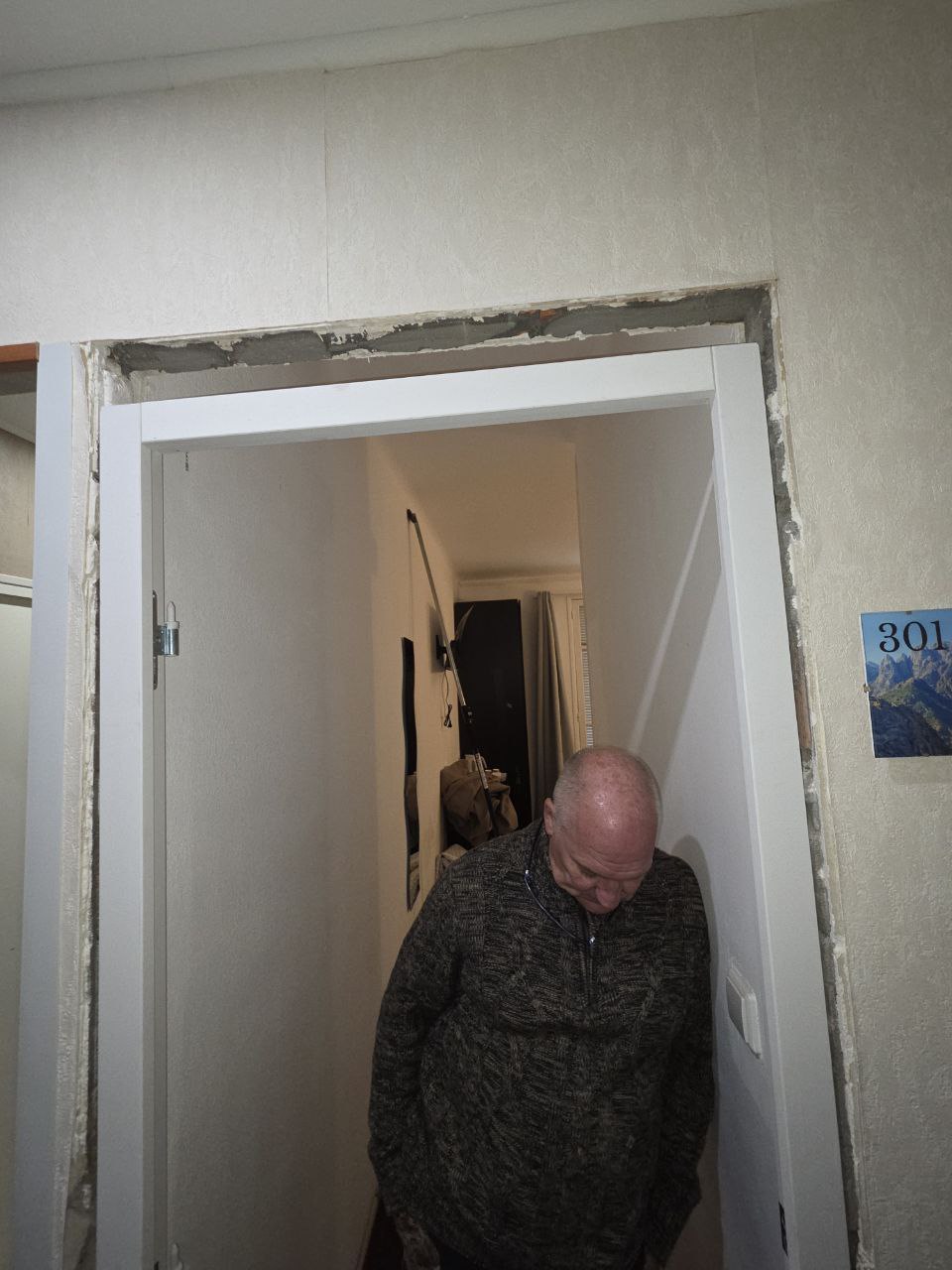
For fitting the doors we called on Olivier. He took charge of the whole installation: the certified fire doors, the frames, the automatic door closers. It is not work you improvise — the frame has to be true, the seals correctly positioned, and the closer adjusted so the door shuts by itself every time someone goes through.
Fire doors are compulsory in hotels under French public-building rules. They are fitted with intumescent seals that swell under heat to block smoke. In a fire, they buy guests the time to get out. It is a regulatory obligation, but it is also genuine protection.
Step 4: the painting — Olivier again
Once the doors were in, Olivier moved straight on to the painting. Corridors and room walls were all redone: preparing the surfaces, filling, sanding, then the coats of paint. He handled the whole thing from start to finish.
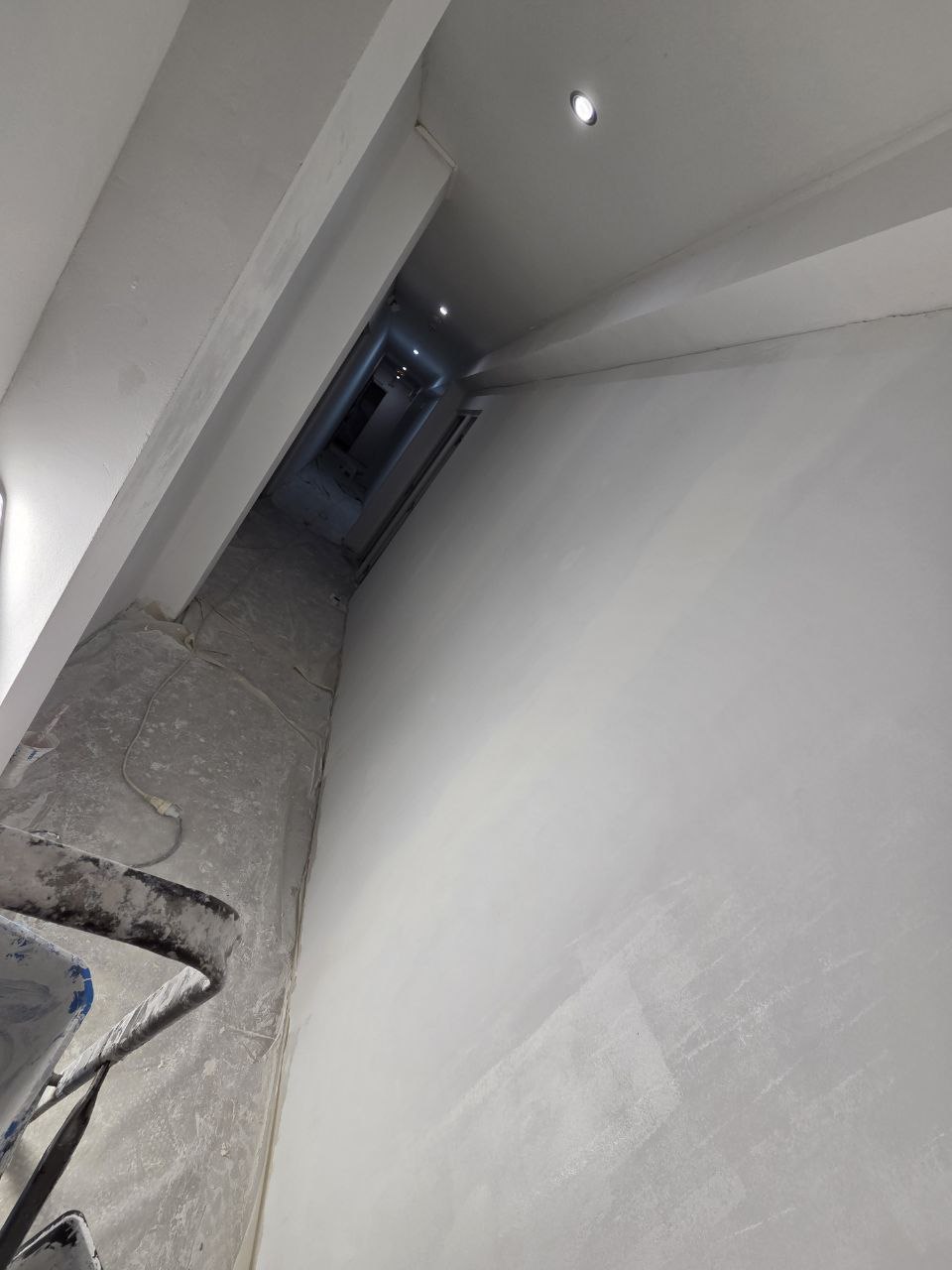
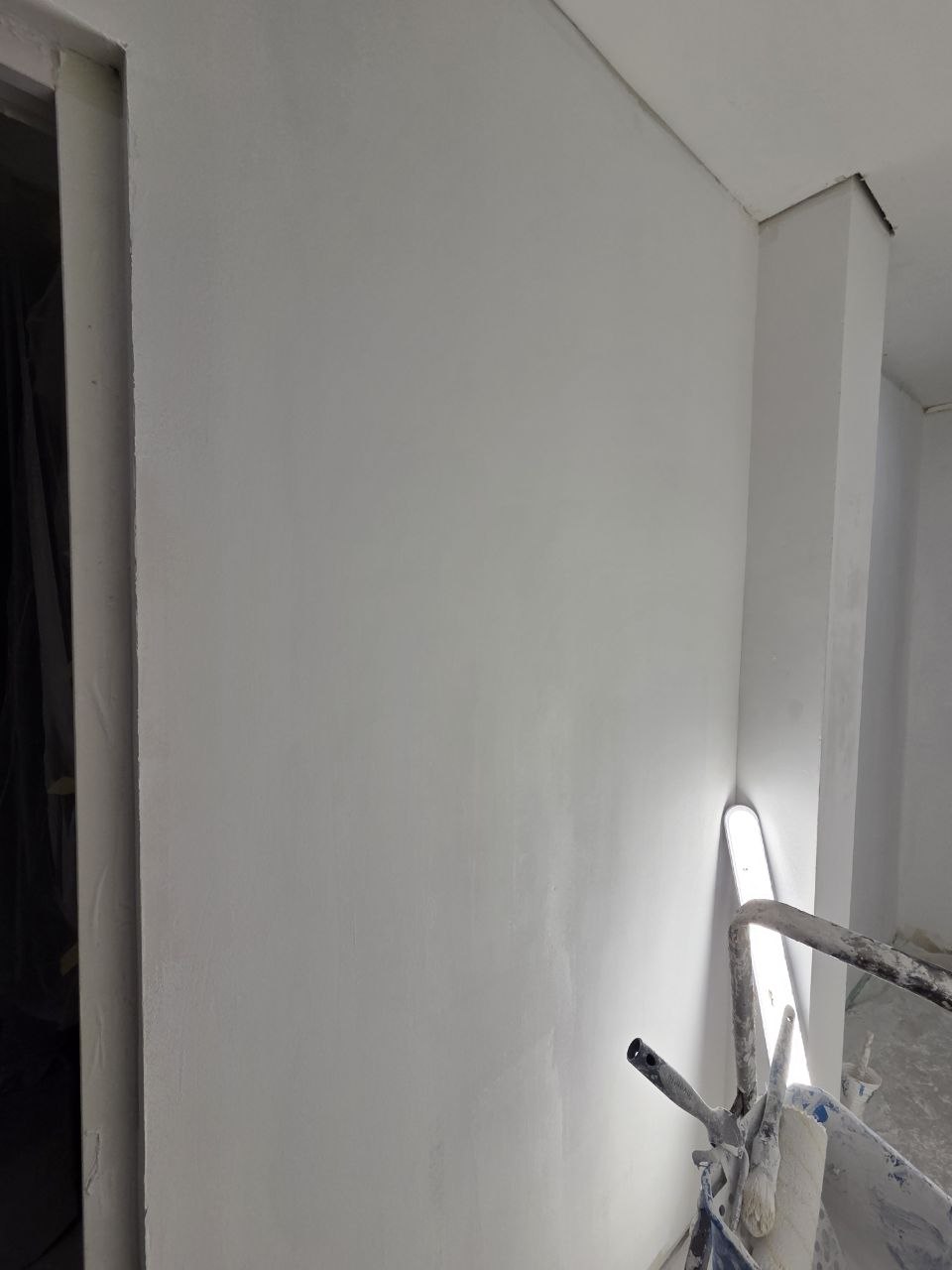
The corridor is now white and crisp, with the new doors standing out against it. It is simple, but it changes the feel of the whole floor.
What it comes to
Guests will never see the intumescent seals. They will not know there used to be double doors. But the corridor is more pleasant, the rooms quieter, and the hotel compliant. That is rather what renovation is — a great deal of work for things nobody notices, and so much the better.
The third floor is coming along. We carry on.